
Adapting Office Pods for Higher Education: Flexible Campus Spaces
College campuses buzz with activity, lecture halls spill into corridors, libraries hum with study groups, and hybrid classes blur the line between online and face-to-face learning, with educators managing both in-person and virtual students simultaneously. This constant motion pushes students, faculty, and facilities teams to find quick ways to add quiet, flexible space. Ecolution Design pods offer a fast, cost-efficient answer.
In this post, we'll take a look at:
These self-contained booths slide into under-used corners, shut out up to 30 dB of noise, and give students a place to focus, meet, or attend virtual class without distraction. For neurodiverse and disabled learners, a pod’s controlled sound and lighting can make study sessions less stressful. When pods come from Ecolution Design, they also advance campus sustainability goals, with Class A acoustics, and built with 99% recyclable material, supporting a circular-economy approach that many universities now demand.
The Rising Need for Quiet, Flexible Space on Campus
Modern campuses grow louder each year. Student newspapers at Yale and the University of South Florida report crowded libraries where talk and phone alerts drown out focus. Many students now “camp out” to claim single-user study pods at most Universities of Connecticut. Clear proof that demand for silent zones is real.
Why the scramble? Three forces converge:
- Hybrid classes keep expanding. About 41% of undergraduates at U.S. community colleges mix online and in-person learning and need a quiet booth for video sessions on campus. Hybrid courses often involve online assignments, which require quiet spaces for students to complete them effectively.
- Virtual interviews and tele-health surge. Eight in ten employers run interviews online, while nearly 90 % of counseling visits now happen by video. Students must find private space fast.
- Focus gaps hurt grades. Research links noise with a 15–20 % drop in cognitive scores; pods that cut up to 30 dB of sound help restore focus.
Result: Facilities teams search for swift, budget-friendly fixes. Office pods, also called privacy pods or study pods, slide into under-used nooks, add acoustic control, and flex between solo and group use without major renovation.
What Is an Office Pod?
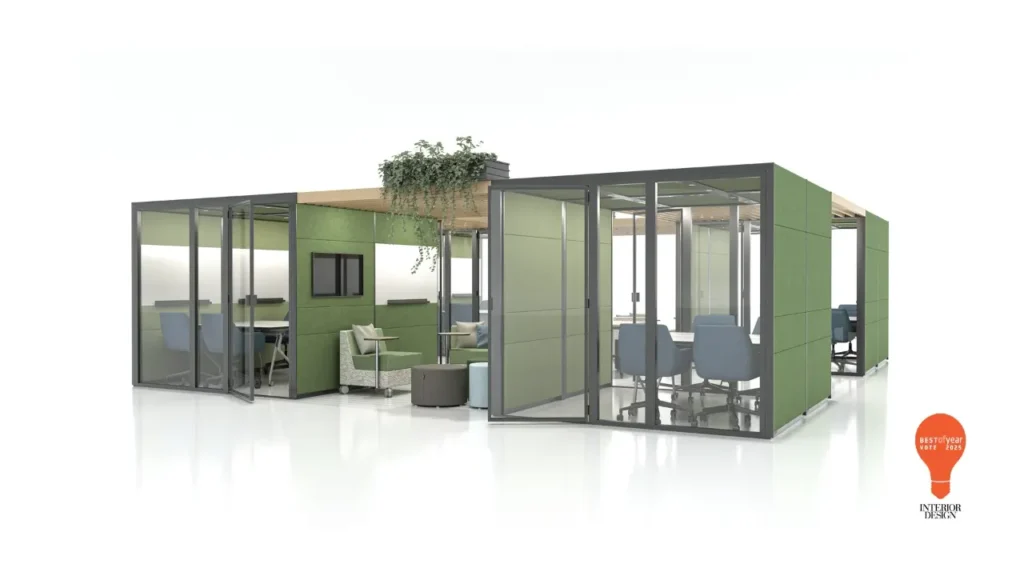
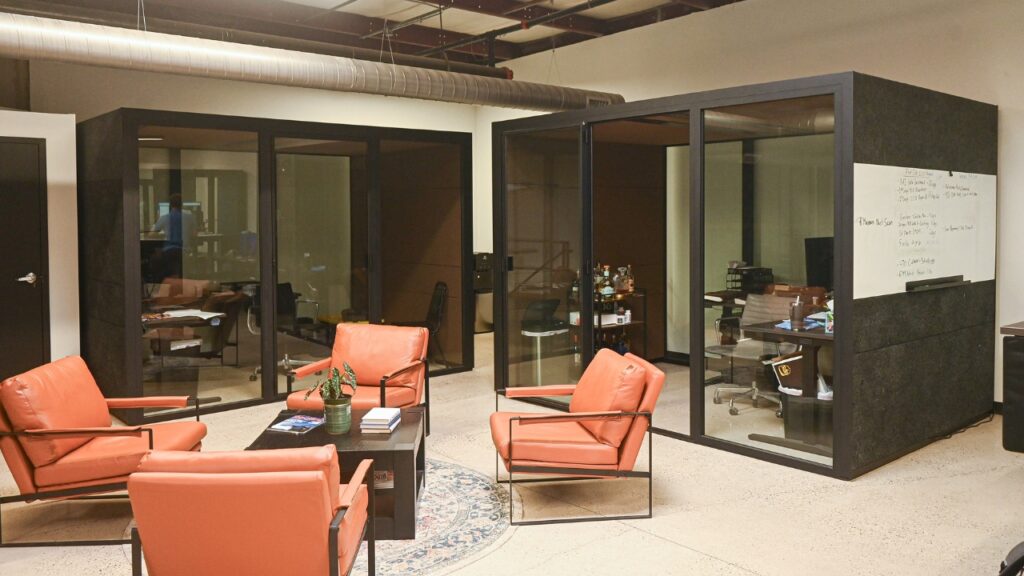
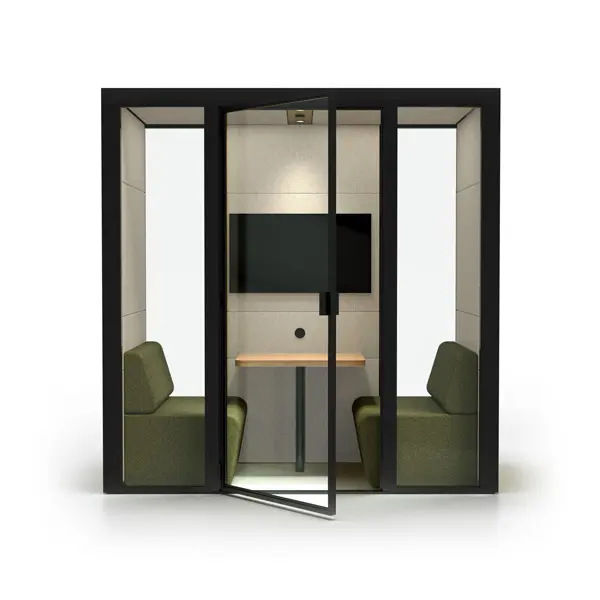
An office pod is a self-contained booth or small room that arrives as a finished or quickly assembled unit. Crews then wheel it into place, connect power, and it is ready for use the same day. There are different pods, and different uses for each.
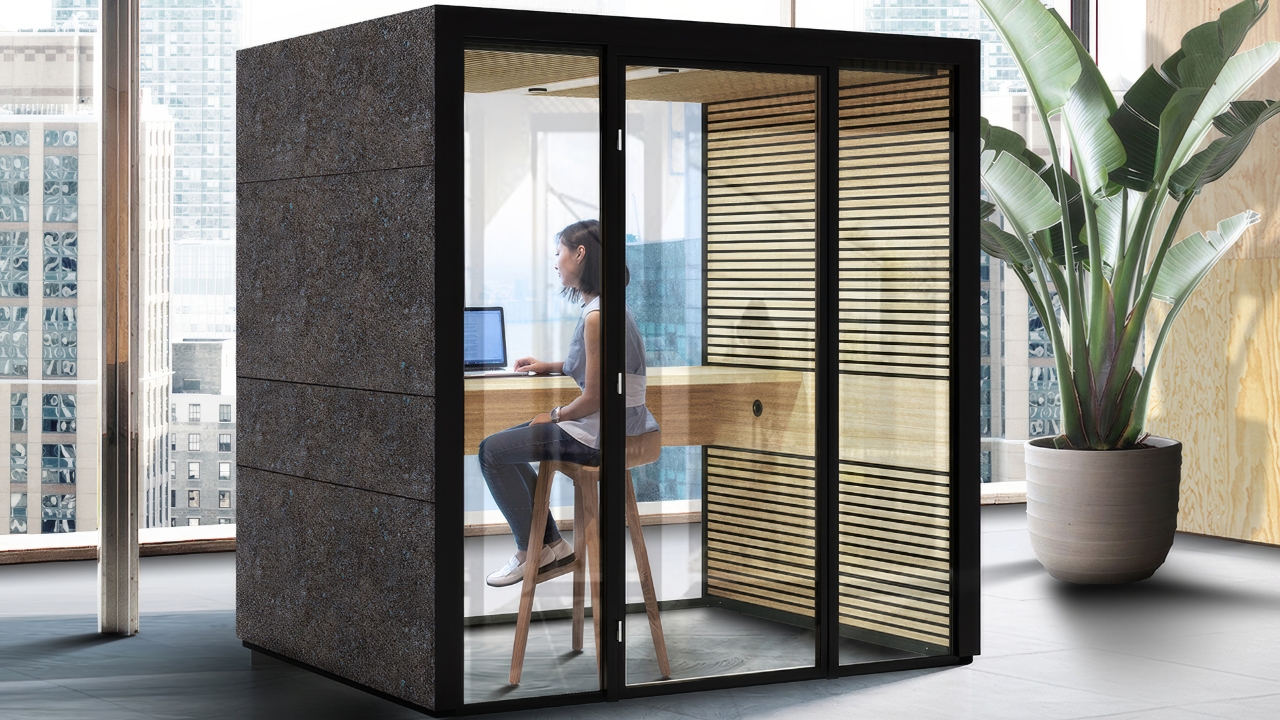
- Work Pods: Solo study, video classes, quiet test taking
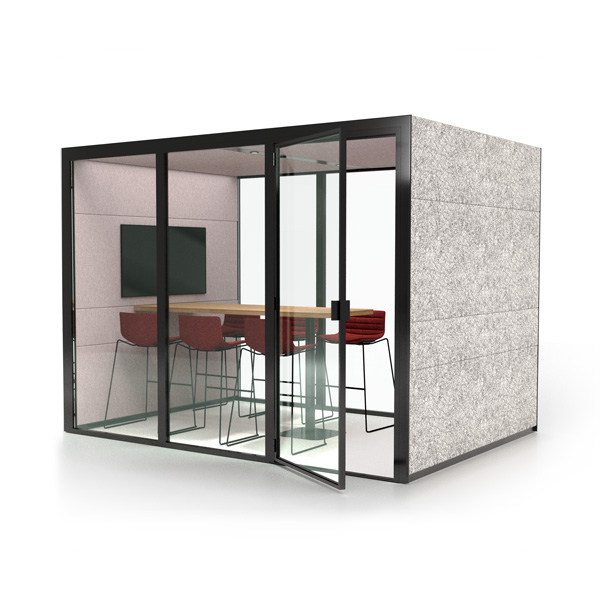
- Meeting Pods: Two- to six-person group projects, tutoring, faculty huddles
- Phone / Privacy Pods: Tele-health calls, job interviews, private advising
Key features
- Acoustic panels that block up to 30 dB of ambient noise.
- Ventilation fans that refresh air every two minutes.
- LED lighting and power outlets for laptops and screens.
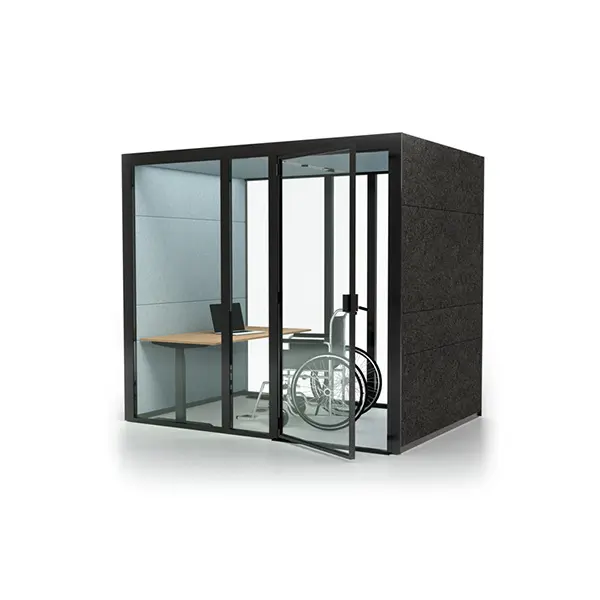
- ADA-wide doorways and low thresholds for wheelchair access.
- Modular frames that can move if the floor plan changes.
Because pods stand on their own floor, they avoid drilling into walls or ceilings. Fire-safety, HVAC, and network teams often approve them faster than full renovations.
Five Ways Office Pods Lift Student Success
Cut Noise, Raise Focus
Pods’ sealed doors and acoustic panels block up to 30 dB of hallway chatter. In quiet zones, research shows test scores climb by 15–20%. These pods enhance students’ ability to focus and perform better academically. Students lock in, finish work faster, and free up library seats for others.
Support Neurodiverse and Disabled Learners
Consistent sound, soft light, and limited visual distractions help students who live with ADHD, autism, or sensory overload. Wheelchair-friendly doors and level floors meet ADA guidelines, so every learner can enter and thrive. The process of creating a supportive learning environment involves considering the needs of neurodiverse and disabled learners.
Enable Hybrid Classes and Virtual Interviews
With 41% of undergraduates taking at least one online course, pods give a private backdrop for live streams, allowing students to join classes virtually from the privacy of an pod. They double as interview booths, vital now that 80% of employers hire through video calls.
Provide Instant Wellness Space
Nearly 90% of college counseling sessions now run online. Effective communication during tele-therapy sessions is enhanced by the privacy and quiet of an pod. A pod converts to a calm, confidential room for tele-therapy or quick mental-health breaks, no construction crew needed.
Spark Small-Group Collaboration
Meeting pods fit two to six people, perfect for project huddles or tutoring, facilitating effective group work and collaboration. Teams connect screens to built-in power and HDMI, speak freely without disturbing nearby study tables, and roll the pod to a new spot when the term ends.
Why Choose Ecolution Design Pods
Top-Tier Sound Control
Ecolution pods reach Category A sound insulation, blocking about 30 dB of outside noise, ideal for libraries and shared halls. The sound control benefits were created to meet the needs of modern educational environments.
Built for a Circular Campus
Up to 98% of each pod’s materials are recycled or recyclable. Choosing these pods helps colleges cut landfill waste and align with green-building pledges. Additionally, using recycled materials helps conserve resources and supports sustainability goals.
Healthy Air and Smart Power
High-efficiency fans refresh air 50–235 m³/h, while built-in outlets and USB keep devices charged. Facilities crews plug pods in and connect data the same day, no long shutdown.
Result: Schools get quiet, eco-friendly study space fast, without tearing down walls. The built-in technology tools enhance the functionality and convenience of the pods.

Cost and ROI: Pods vs. Traditional Renovation
Office pods carry one fixed price per unit and need no demolition or permits. Crews roll each assembled pod into place and power it up in a single day, so the hallway stays open and class schedules keep running. A full build-out tells a different story: architects draw plans, workers tear down walls, install drywall and ceilings, and paint. That effort can stretch four to twelve weeks and often closes nearby rooms, creating dust and noise that disrupt lessons.
Ecolution Design’s collection of pods add another edge of mobility. When a program shifts or a department moves, facilities teams can relocate or resell the pods instead of ripping out permanent walls and paying again. Because universities avoid design fees and long shutdowns, many report about 30 percent lower infrastructure costs after switching to modular pods. Over five years, most campuses see a double return: they save money at install and save again each time a pod moves to a new spot.
Campus Facilities Checklist
Before ordering pods, verify a few key points. First, pick units that block at least 25 dB to meet library quiet-zone needs. Make sure every door offers a 32-inch clear opening and a flat threshold so wheelchair users enter with ease. Each pod should plug into a standard 120-volt outlet and a data jack to keep laptops and cameras live during hybrid classes. Built-in fans must refresh air every two minutes; this flow keeps the space fresh during long study sessions. Check local fire codes to confirm the pod sits below sprinkler heads, which avoids costly system changes.
Plan for smooth operations, too. Link pods to a QR or app-based booking system to prevent scheduling conflicts, and set a daily wipe-down routine for high-touch areas to protect health. Finally, choose models that use at least 90 percent recyclable parts so the campus can meet its sustainability pledges when the pods reach end of life. Covering these details upfront speeds approvals, eases installation, and encourages students to use the pods from day one.
FAQ — Quick Answers for Campus Teams
How long does installation take?
Most pods roll in and power up in one day. Larger clusters may need two. No disruptive demolition is required. We work with you space to design the perfect solution.
Are office pods ADA compliant?
Yes, choose units with a 32-inch clear door, low threshold, and turning space. These specs meet common ADA rules.
Do pods need extra HVAC?
Built-in fans refresh air every two minutes. In most buildings, existing HVAC handles the load; no duct work is added.
How much noise do pods block?
Quality models cut 25–30 dB of ambient sound, turning busy halls into near-silent study zones.
How do pods support hybrid learning?
Are pods recyclable at end of life?
Pods give students a quiet backdrop, stable lighting, and power for laptops and cameras, key for online lectures, virtual labs, and recorded presentations.
Ecolution Design pods use up to 98% recyclable parts, with steel, aluminum, and acoustic felt. With full transparency with our Eco Passports. Crews disassemble and route each part to standard recycling streams.


Future-Ready Learning Starts Inside a Pod
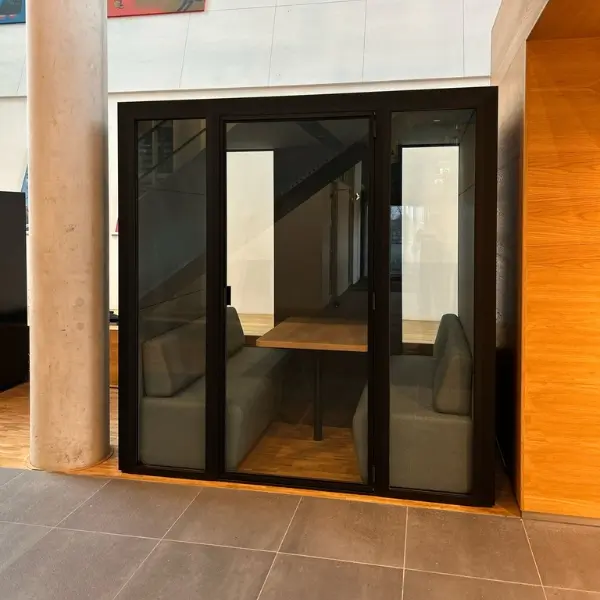
Adapting office pods for higher education gives campuses a fast win: quiet study space, flexible group rooms, and green building gains without heavy construction. Evidence from schools across the country shows pods raise focus, support hybrid classes, and cut infrastructure costs by roughly 30 percent. Ecolution Design’s Class A, 98 percent-recyclable pods add a sustainability edge that aligns with today’s climate goals.
As enrollment trends shift and digital learning grows, facilities teams need solutions that move and grow with them. Pods meet that demand. Ecolution Design pods also support the hybrid educational model by providing flexible and quiet learning spaces where students can attend classes either in-person or remotely, utilizing technology to facilitate learning. Explore the Work Pod, Meeting Pod, or full Flex Pod range to start creating quieter, more inclusive spaces this semester.