The Office Environment: Designing for Productivity, Engagement, and Belonging
The office environment plays a critical role in employee productivity, engagement, and overall job satisfaction. Whether setting up a first office, redesigning an existing space, or continuously optimizing a workspace, companies must give careful consideration to how the design impacts their workforce. A well-thought-out office fosters a sense of belonging, encourages collaboration, and supports different work styles.
In this post, we'll take a look at:
A workspace designed with employees in mind enhances efficiency and workplace ownership. Employees who feel comfortable and valued in their office setting are more likely to stay engaged, contribute meaningfully, and develop a stronger connection to their workplace. The modern office is no longer just about desks and chairs—it is a dynamic space that adapts to employees’ needs, balancing focus, collaboration, and flexibility.
This article explores how businesses can create an office environment that supports productivity, enhances company culture, and meets the evolving needs of a diverse workforce. When workplaces incorporate smart design choices, ergonomic furniture, and flexible workspaces, companies can ensure their offices remain functional, inspiring, and future-ready.
The Role of Office Design in Employee Productivity
Understanding Workplace Needs
An effective office environment begins with understanding how employees work best. Each workspace should be tailored to support different tasks, whether focused work, collaboration, or creative brainstorming. When companies take the time to evaluate employee needs, they create a functional office layout that enhances workflow and minimizes distractions.
Key considerations include:
- Open vs. Private Spaces – Open layouts promote teamwork, while private areas support concentration.
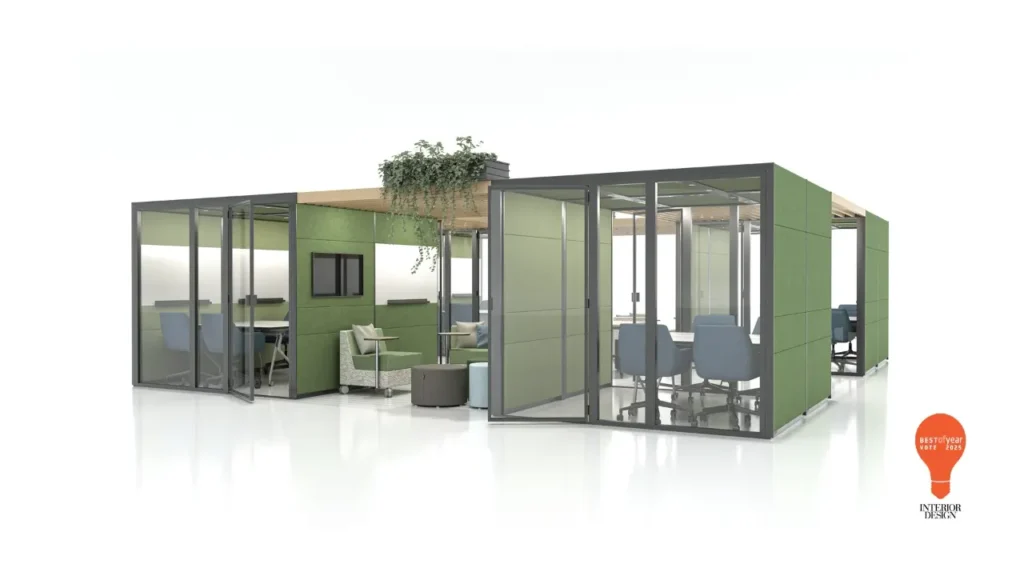
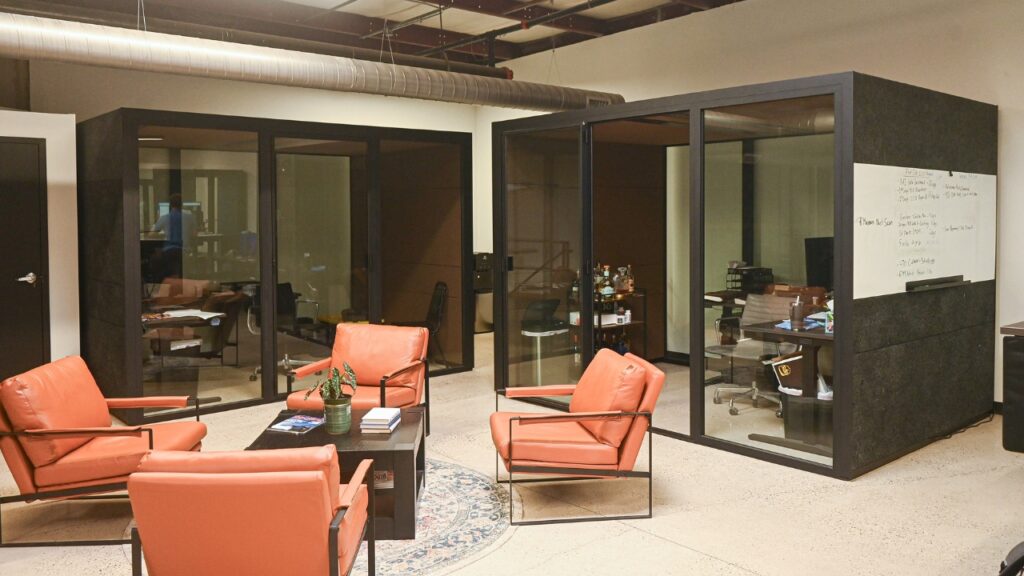
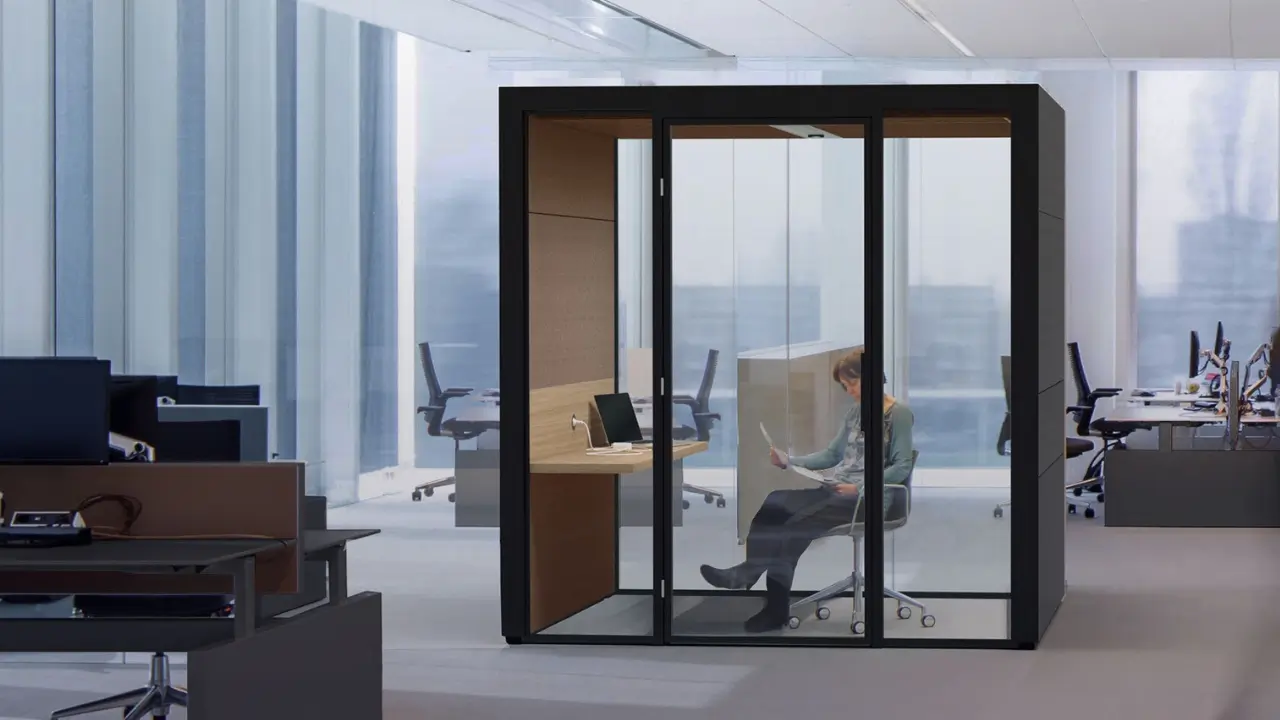
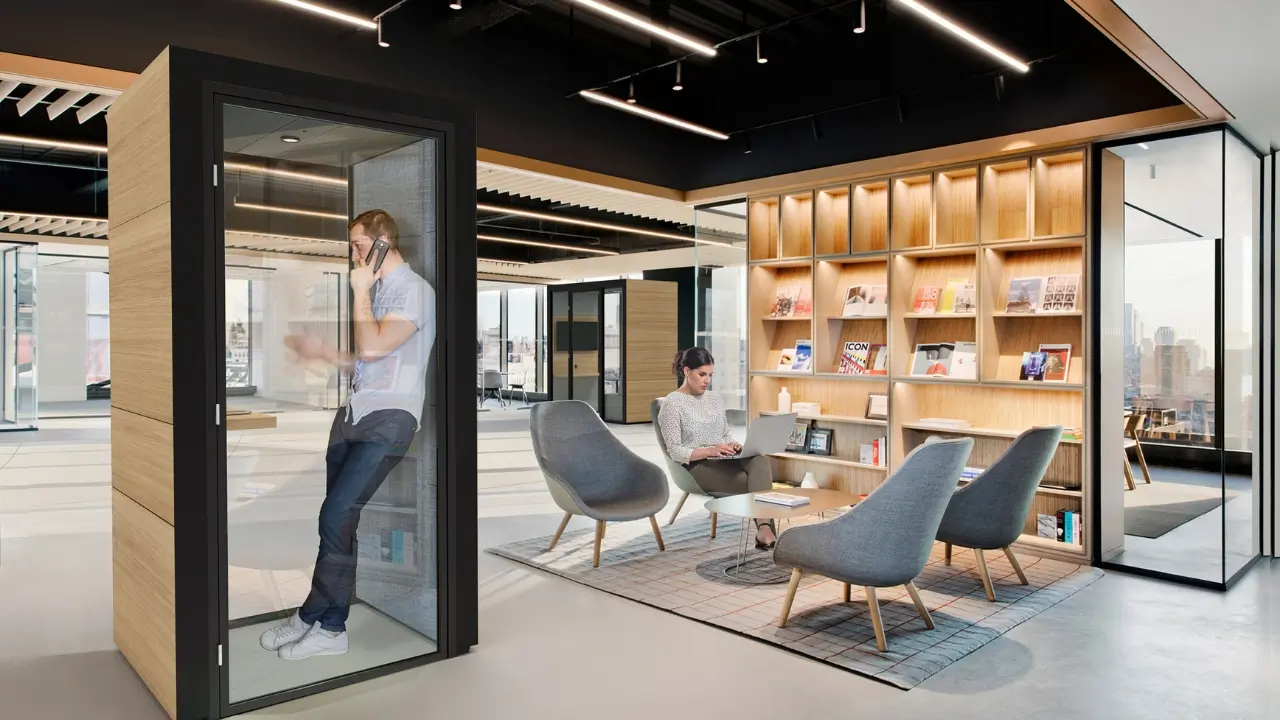
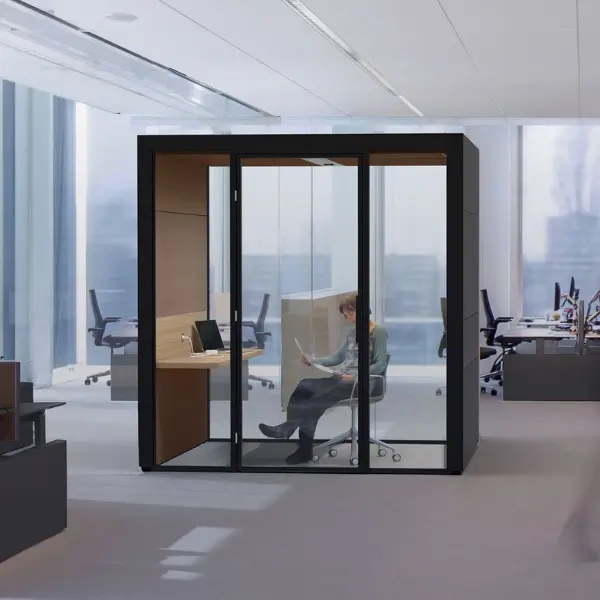
- Noise Control – Acoustic solutions like our Phone Pod and Meeting Pods provide quiet zones for focused work and confidential meetings.
- Ergonomic Workstations – Adjustable desks and ergonomic chairs improve comfort and reduce strain.
Creating a Functional and Flexible Office
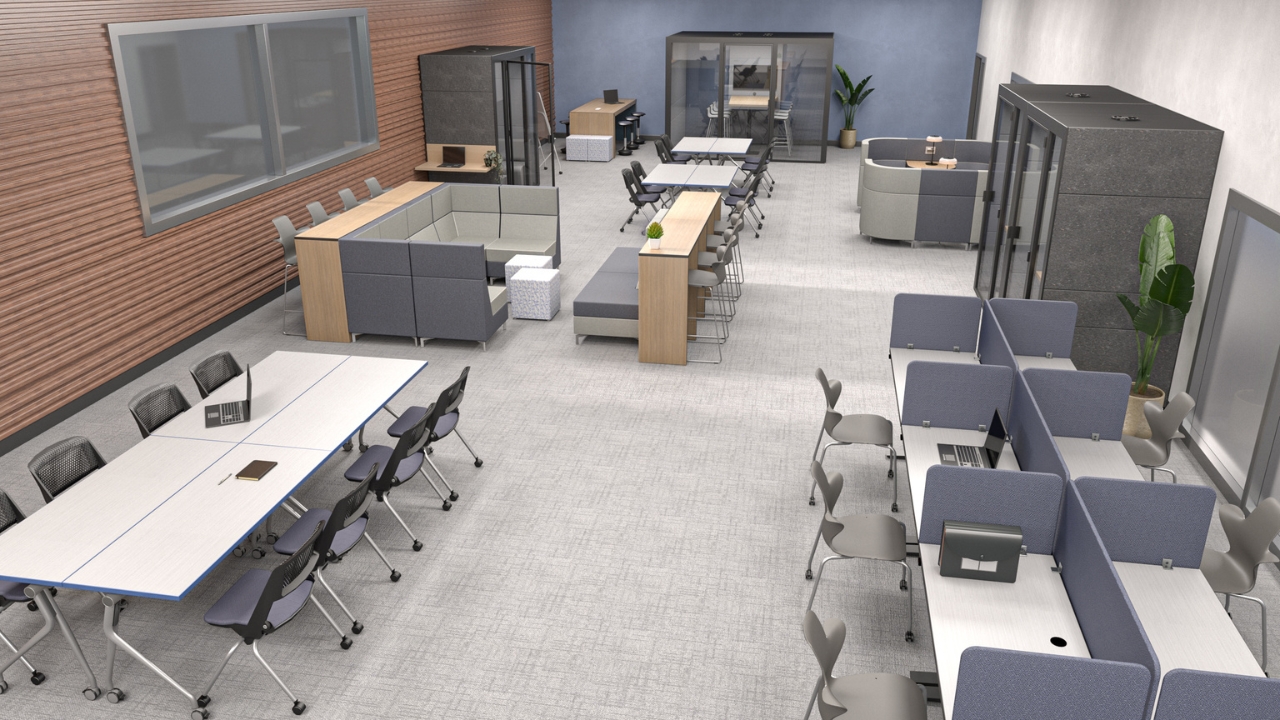
As hybrid work and flexible schedules become standard, office spaces must adapt. Creative solutions are essential in designing spaces that can easily transition between different uses. Workspaces should accommodate both in-person collaboration and remote-friendly setups.
To achieve this, companies can:
- Use modular furniture to create adaptable workstations.
- Incorporate multi-use spaces, such as our Flex Pods, which offer both individual and collaborative work environments.
- Provide breakout areas that encourage informal discussions and team bonding.
A well-designed office makes employees feel comfortable and valued, increasing engagement and productivity. Investing in thoughtful office design not only enhances efficiency but also fosters a workplace culture where employees want to be.


Branding Through Office Design
Office Aesthetics and Company Culture
The office environment serves as more than just a place to work—it is a direct reflection of a company’s brand identity and values. Inclusive office spaces that reflect company values and accommodate diverse needs are essential for fostering a positive company culture. Every design choice, from colors and materials to furniture and layout, tells a story about the company’s culture. A workplace that aligns with its brand creates a stronger connection between employees, clients, and visitors.
Key elements that reinforce brand identity in an office include:
- Color Schemes – Companies can use brand colors in walls, furniture, and décor to create a unified aesthetic.
- Materials & Textures – Sustainable materials, like those used in our pods, showcase a company’s commitment to eco-friendly practices.
- Custom Workspaces – Spaces designed around how employees work reinforce a company’s employee-first mindset.
First Impressions Matter: Wowing Clients and Employees
An office’s first impression sets the tone for visitors and employees alike. Reception areas, meeting rooms, and shared spaces should be inviting, professional, and aligned with company values.
To create a positive first impression:
- Reception areas should be well-lit and welcoming, with comfortable seating and clear navigation.
- Private meeting spaces, like Meeting Pods, provide professional, soundproof environments for discussions.
- Biophilic design elements, such as greenery and natural lighting, enhance both aesthetics and well-being.
- A well-branded office inspires confidence, boosts engagement, and reinforces a company’s identity, ensuring employees and clients feel connected to the space.
Employee Well-Being and Comfort in the Office Environment
Creating a Comfortable and Engaging Space
A well-designed office environment prioritizes employee comfort and engagement, ensuring that workers feel valued and motivated throughout the day. Companies that invest in ergonomic workstations, quiet zones, and social spaces create a more productive and enjoyable workplace.
Key factors that improve comfort and well-being:
- Ergonomic Furniture – Adjustable desks and chairs help reduce physical strain and improve posture.
- Temperature and Lighting Control – Offices should provide customizable climate settings and natural light exposure to enhance focus.
- Quiet Workspaces – Employees need distraction-free zones, such as Duo Pod, for calls and deep work sessions.
Psychological Safety and Sense of Belonging
A workplace should be more than functional—it should foster psychological safety and a strong sense of belonging. Employees who feel comfortable expressing themselves and collaborating freely are more engaged, innovative, and committed to their organization.
Ways to build belonging in the office:
- Encourage Team Interaction – Provide communal spaces where employees can connect and collaborate.
- Private Retreats for Focused Work – our pods offer quiet, enclosed spaces that support individual work without isolation.
- Personalization Opportunities – Let employees customize their workspace to reflect their personality and work style.
To design an office with employee well-being in mind, businesses can create a positive, inclusive, and engaging atmosphere, leading to potential higher job satisfaction and retention.
Inclusivity and Diversity in the Workplace
Designing for a Diverse Workforce
An inclusive office space accommodates a wide range of work styles, needs, and preferences. Considering diversity in office design, businesses foster an atmosphere where all employees feel valued and empowered.
Key aspects of inclusive office design:
- Gender-Inclusive Spaces – Ensure facilities, such as restrooms and wellness rooms, are accessible and comfortable for everyone.
- Varied Work Areas – Balance open collaboration zones with private spaces.
- Accessible Design – Offices should be ADA-compliant, with wide pathways, ergonomic workstations, and adjustable desks.
Encouraging Employee Ownership of Their Workspace
When employees have a say in their workspace, they feel a greater sense of ownership and engagement. Offering flexibility in workspace design and layout can significantly impact morale and productivity.
How to empower employees in their workspace:
- Allow personalization – Let employees customize their desks with plants, photos, and preferred setups.
- Provide flexible seating options – Use modular seating and office pods to support both individual work and group collaboration.
- Encourage input on office changes – Gather feedback on office layouts and amenities to continuously improve the work environment.
An office that embraces diversity, inclusivity, and flexibility ensures that every team member has a space where they feel comfortable, productive, and engaged.


The Future of Office Environments
The Evolution of Office Spaces
The traditional office is no longer the default workspace. As work habits evolve, companies must rethink their office environment to stay relevant. Today’s workplaces prioritize flexibility, collaboration, and well-being, incorporating elements that enhance both productivity and employee experience.
Key trends shaping modern office spaces:
- Hybrid Work Models – Offices now serve as collaboration hubs rather than full-time workstations.
- Third Workplaces – Employees seek alternative workspaces, from coffee shops to coworking spaces that offer flexibility.
- Sustainable and Smart Design – Companies integrate eco-friendly materials and smart technology to create a greener, more efficient office.
The Hybrid Work Model and Office Adaptability
With many employees splitting time between home and office, companies must optimize their physical workspace to accommodate changing needs. The goal is to make the office a desirable place to work, rather than an obligation.
How offices can adapt to hybrid work:
- Flexible Workstations – our office pods offer private, soundproof spaces for hybrid workers who need a quiet area for focus.
- Tech-Integrated Spaces – Offices need seamless digital connectivity, ensuring hybrid meetings run smoothly.
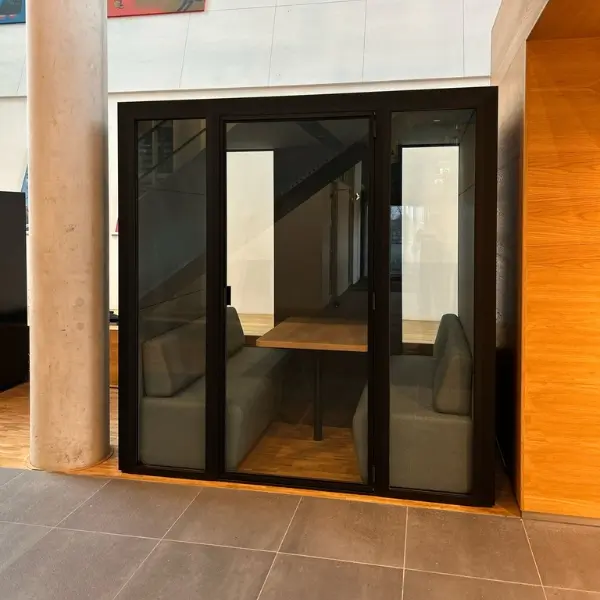
- Multi-Use Collaboration Areas – Spaces like our meeting pods support in-person and virtual team interactions.
Embracing these changes, businesses can create an office environment that remains engaging, productive, and future-ready.

Designing The Office Environment
The office environment is more than just a workspace—it directly impacts productivity, engagement, and employee well-being. Inclusive office spaces that cater to diverse needs are essential for creating a supportive and engaging work environment. Whether designing a new office, renovating an existing space, or adapting to hybrid work, businesses must consider how their workspace supports employees’ needs and aligns with company values.
A well-designed office:
- Boosts Productivity – Ergonomic workstations, quiet zones, and flexible layouts enhance focus and efficiency.
- Fosters Belonging – Inclusive spaces and personalized workstations create a sense of ownership and engagement.
- Reinforces Brand Identity – Thoughtful design choices reflect company culture and professionalism.
To stay competitive, companies must evolve their office spaces, integrating smart technology, sustainable materials, and hybrid-friendly solutions like Ecolution Design’s Pods. By doing so, businesses can ensure their workplace remains a dynamic, inspiring space where employees want to be.