Sustainable Interior Design on a Leased Floor
A sustainable interior design decision comes down to four things: low-carbon or reclaimed materials, responsible sourcing, reuse and reduced waste, and whether what you specify survives a floor-plan change. On a leased floor, that last point decides the rest. If you manage a leased commercial floor, you already know lease-end means make-good. A crew then pulls your pod apart into a skip.
In this post, we'll take a look at:
What makes sustainable interior design actually sustainable?
A pod earns the word when it uses low-carbon or reclaimed materials, draws on responsible sourcing, and keeps the people inside breathing clean air. Above all, it can be reused rather than demolished. Three of those four describe what a thing is made of. The fourth describes what happens to it, and the fourth governs everything else.
Picture a drywall fit-out that went in two years ago. This quarter a crew tears it out because the floor plan moved. Every bit of its embodied carbon goes to landfill, and no amount of recycled content in the original spec changes that outcome. Materials are necessary, but they are not sufficient. The real question behind interior design and sustainability is what happens to this thing in ten years. On a leased floor the honest answer is often “it gets demolished before the lease is even up.”
That reframes the whole decision for the person specifying the work. The benefits of low-carbon materials and responsible sourcing are real. Still, you only collect them if the pod is still in use and still yours when the layout changes around it.
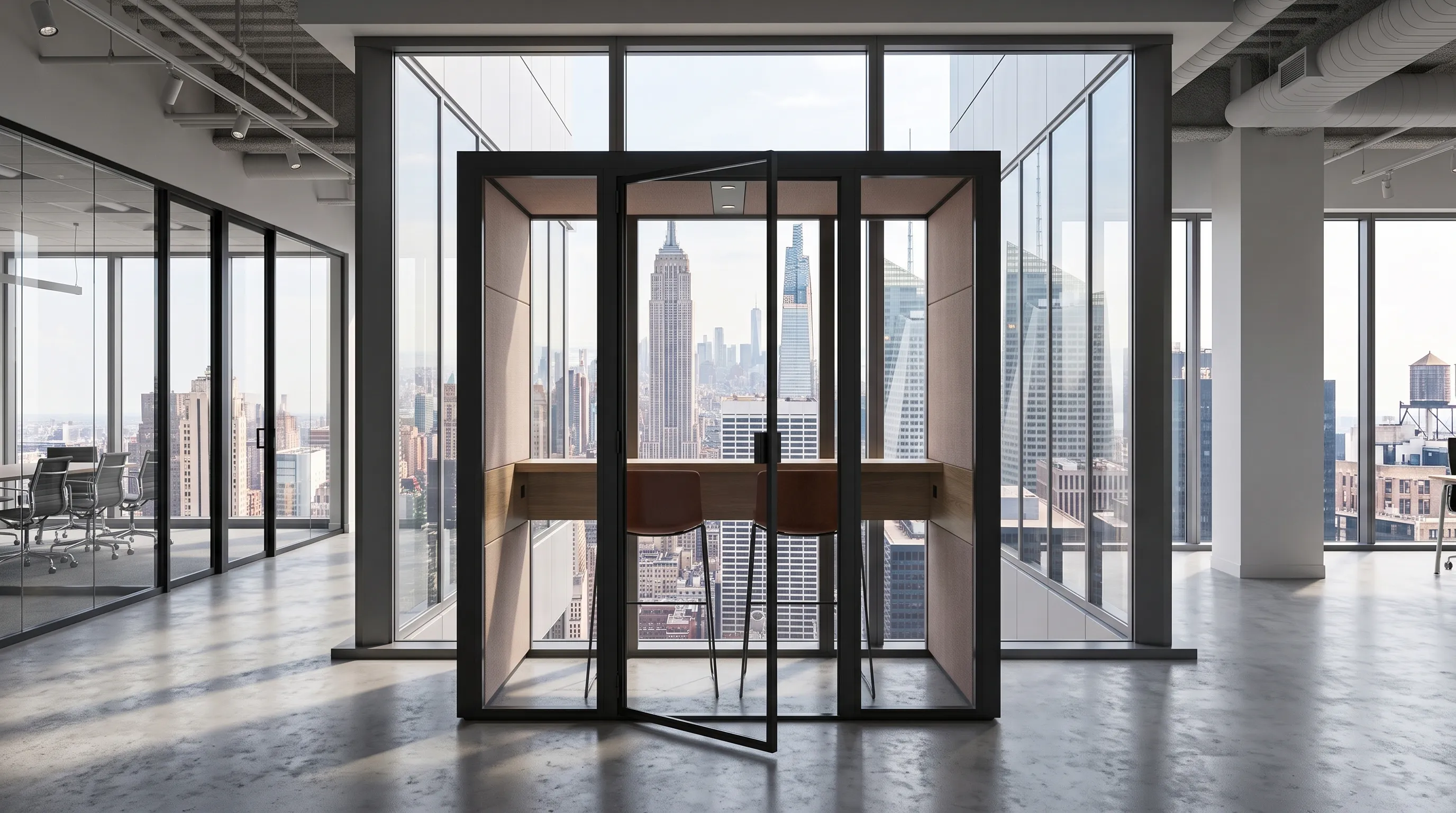
How do materials and sourcing shape sustainable interior design?
Materials matter, and the strongest materials story is high recycled content going in paired with near-total recoverability coming out. Interior design with sustainable materials usually stops at the first half of that sentence. Ecolution Design builds its pods from up to 91% recycled content, and they are 99% recyclable at end of life. The design for disassembly explains why: components separate and recover individually instead of leaving as one landfill-bound unit.
Sourcing is where a lot of eco friendly materials quietly lose their footprint. A recycled-material product shipped across an ocean still carries the logistics carbon of that journey. We design and manufacture in Grand Rapids, MI with locally sourced materials. Since the supply chain stays short, shipping carbon stays low and repairs run faster. Made in USA is a sustainability argument first and a flag second. Even the packaging stays in the loop through a returnable crate system rather than single-use cardboard.
Natural materials for interior design read well on a mood board. On a commercial floor, though, the specifier has to document the choice. Eco friendly interior design materials now have to show their embodied carbon for LEED, BREEAM, and ESG reporting. A traceable supply chain and a filed figure turn a sustainability line on a spec sheet into something a procurement team can defend. For a deeper look at how to check those claims, see our guide to sustainable furniture and how to verify it.
What is a reusable, relocatable pod best for?
A reusable, relocatable pod is best for a leased floor whose plan will change before the building does. There you want room-level performance you can recover and reconfigure rather than write off. It suits the specifier who expects the team to grow, shrink, or move within the lease and refuses to pay for that room twice.
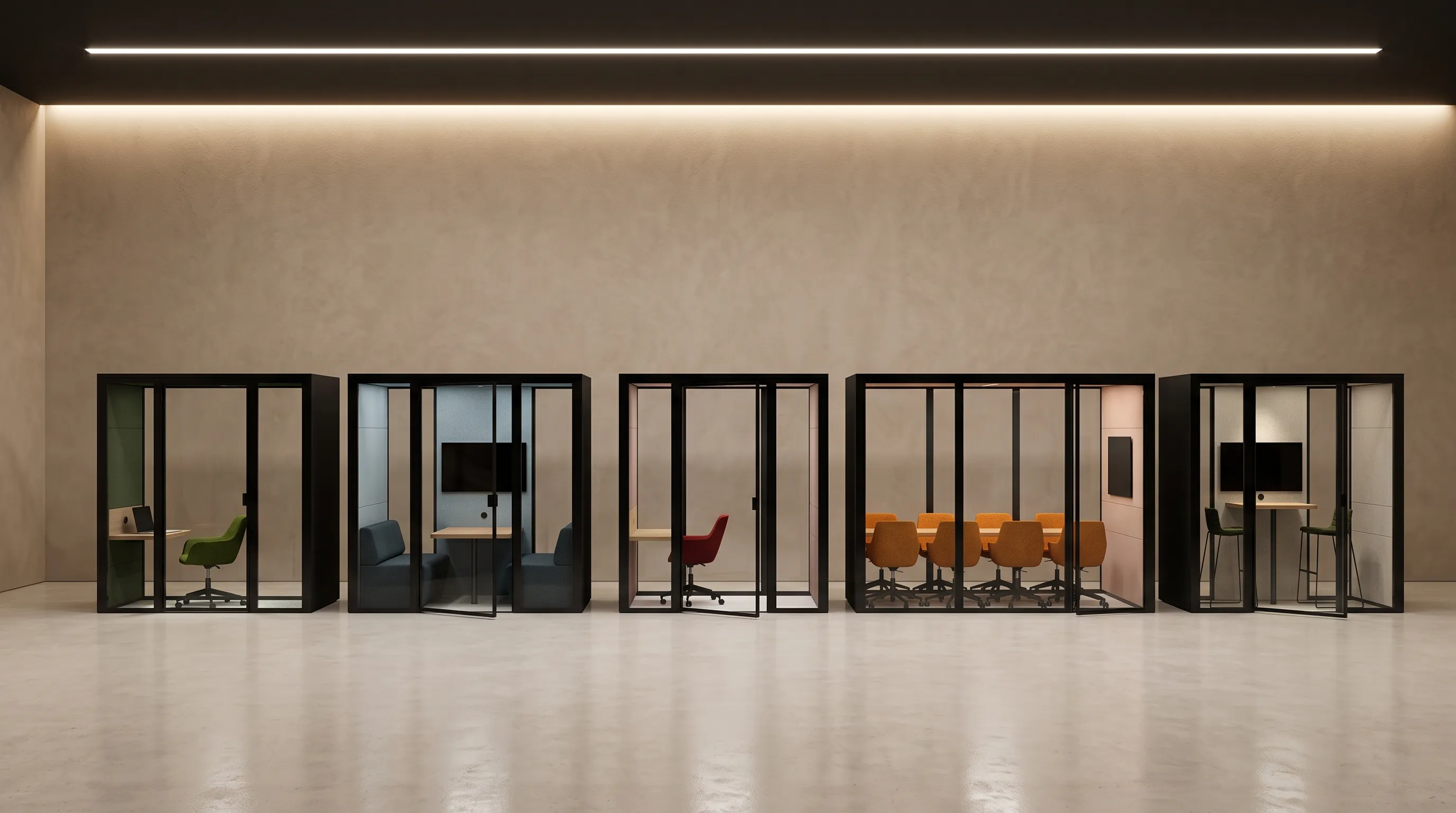
The mechanism is concrete. One interchangeable component grid yields 56 configurations, so a damaged or outdated panel is a part swap, not a new unit. The no-floor design leaves no trace on the slab, which means there is nothing to make good at lease end.
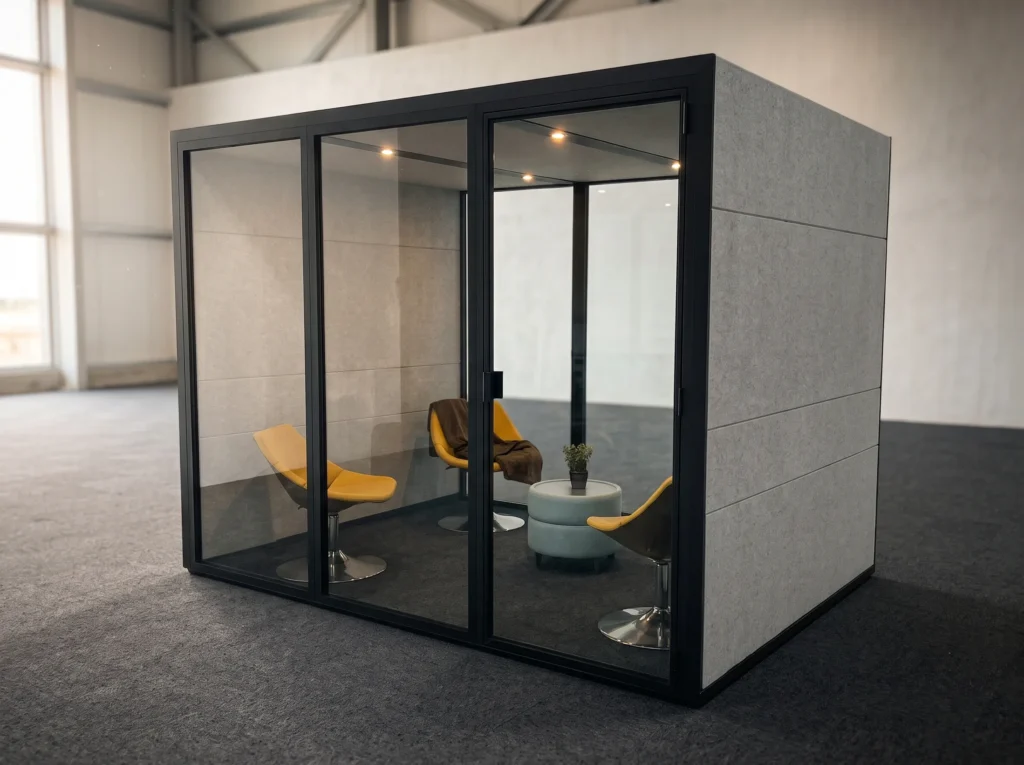
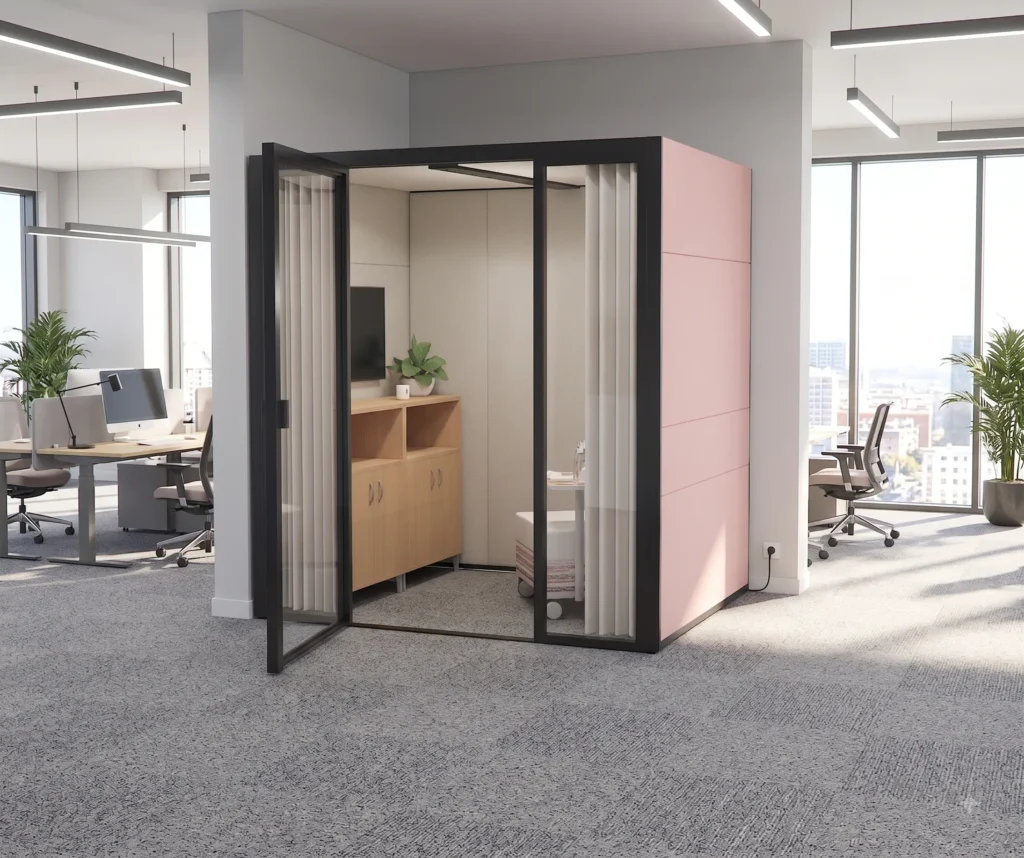
This is neither furniture nor permanent construction. It is room-level performance without permanent architectural change, built on-site in less than a day, with no floor prep. Reuse through reconfiguration does more for the lifecycle than recycling ever will, because a reconfigured enclosure keeps working while a recycled one has already stopped. The same logic drives modular office furniture that reconfigures instead of retiring.
How a relocatable pod behaves on a real floor
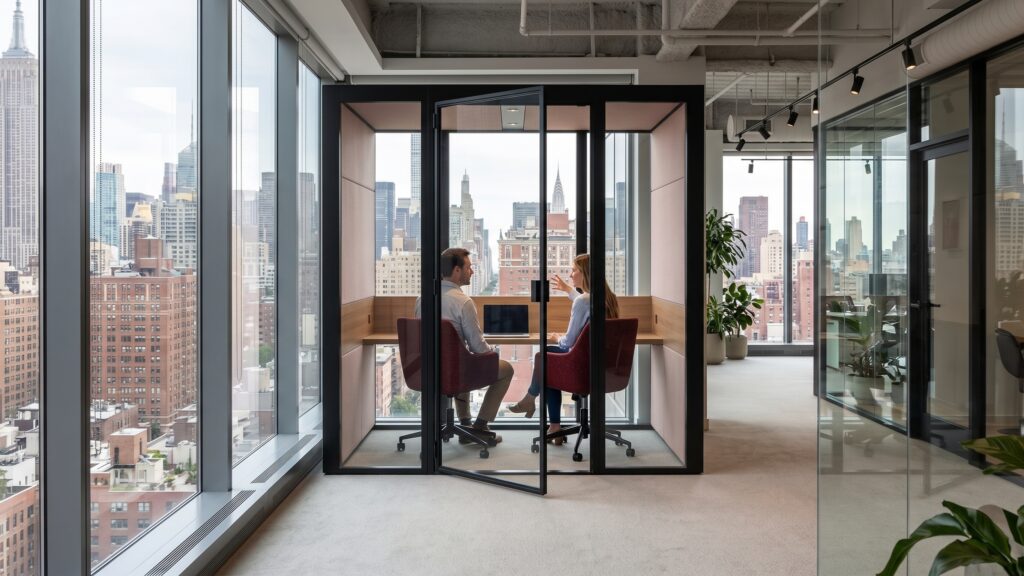
That is how a sustainable interior holds up on a real floor. On a recent commercial office project, a crew installed and physically connected multiple units to fit the layout, and acoustic and ventilation performance held across the linked units. Nothing structural changed, and the whole installation stayed fully reversible. Knowing how to make interior design sustainable on a lease comes down to specifying things that can leave the floor the way they arrived.
What is a traditional built-out best for?
A permanent stud-and-drywall built-out is best for genuinely fixed, owned space, or for rooms tied to plumbing, code, or a use that will not change for the life of the lease. It delivers a permanent, single-purpose room, and when the floor plan really is permanent, that is the right call and the cheaper one.
The trouble is the assumption underneath it. A permanent pod assumes the floor plan is permanent, and on a leased floor it rarely is. A built-out changes only by demolition. At that moment its embodied carbon and the capital you spent go to landfill together. Name that premise now, because it is the hinge the whole comparison turns on. It is also one of the sustainable interior design elements most buyers never price in.
Sustainable interior design compared: a relocatable modular pod vs. a permanent built-out
The bottom line: if the room will outlast the lease, build a wall; if it will not, specify something you can recover. Here is how the two options compare across the axes a budget conversation actually turns on.
| Axis | Relocatable modular pod | Permanent built-out |
|---|---|---|
| Cost | Reusable capital that travels to the next layout and reconfigures by a part swap | Capital written off as demolition and landfill at lease-end or re-plan |
| Speed | Built on-site in less than a day, no floor prep | Weeks of construction, then demolition waste and floor downtime |
| Flexibility / circularity | Demountable and reconfigurable, 56 configurations from one grid, recoverable with no trace on the slab | Changes only by demolition |
| Materials / embodied carbon | Up to 91% recycled content, 99% recyclable, designed for disassembly | Embodied carbon locked into materials that become demolition debris |
| Occupant health / IAQ | Sealed enclosure with ventilation that refreshes the air inside | Inherits the floor’s air and VOC load unless separately specified |
The contrast lives in what happens after the floor plan changes. A modular pod comes apart into parts you reuse, whereas a built-out comes apart into debris you pay to haul away. On the day of install, the modular enclosure stands and works before a drywall crew would have finished framing. That gap tells you which decision behaves like an asset and which one is a leasehold improvement depreciating to zero.
The circular side is just as plain. Eco-friendly interior design that comes apart and recovers keeps its material value in play. A conventional room sends that value to landfill in one event. The smartest move with existing office furniture, then, is to recycle only after you have exhausted reuse. The choice to buy eco furniture matters far less than the choice to buy something you can take apart. For more on reducing waste at the floor level, see our greener workplace steps that pay back.
When is a relocatable pod the wrong choice?
A relocatable pod is the wrong choice for genuinely permanent, owned space, for rooms that must be hard-plumbed or tied to building code, and for a site with no freight route to bring the panels in. In those cases a built-out is the right answer, and pretending otherwise would be dishonest. Knowing how to make interior design sustainable includes knowing when not to over-engineer the flexible option.
Where the use is settled and the floor plan truly is fixed, a wall that will never move should be a wall. Spend the money once, build it solid, and move on.
Why Ecolution Design builds sustainable interior design for the next floor plan
Our pods are made from up to 91% recycled materials and are 99% recyclable at end of life, designed for disassembly so the components separate and recover individually instead of going to landfill as a single unit. Reconfiguration happens by part swap across a 56-configuration component grid. An outdated panel then costs a single component and keeps the rest of the pod in service. The numbers are the argument; they describe a product engineered to stay in service across layout after layout.
None of this trades away performance. A sealed enclosure still shuts out at least 30 dB of ambient noise at a Class A rating, with ventilation that keeps refreshing the air inside. Design and manufacture happen in Grand Rapids, MI with locally sourced materials, which shortens the supply chain and speeds up low-waste replacements. Sustainable interior design examples usually show you a finished room. The better proof is a room that can become a different room without a skip in the parking lot.
Frequently Asked Questions
What materials make an interior pod sustainable?
A sustainable pod leads with high recycled content going in and near-total recoverability coming out, which is why Ecolution Design pods use up to 91% recycled content and are 99% recyclable at end of life. The deeper test is whether those materials come apart and recover rather than lock into a room a crew can only demolish. Green interiors and design live or die on disassembly, not on the mood board.
How is embodied carbon different between a demountable pod and a drywall build-out?
A demountable pod keeps its embodied carbon in play, because the components come apart and go back into service in the next layout. A drywall build-out sends its embodied carbon to landfill the moment the floor plan changes and a crew demolishes the room. Same carbon spent up front; very different outcome over the life of the lease.
What happens to a sustainable pod at the end of a lease?
A no-floor, demountable pod leaves no trace on the slab, so there is nothing to make good, and you can take the enclosure down and rebuild it elsewhere. A permanent built-out becomes make-good demolition and a waste haul. That difference is the clearest line between reusable capital and a leasehold improvement that depreciates to zero.
Does a sealed enclosure help indoor air quality on an open floor?
Yes. A complete, sealed enclosure with its own ventilation refreshes the air inside it rather than inheriting whatever the open floor is circulating. On a floor with an older HVAC load or lingering VOCs, that gives the people inside a controlled pocket of clean air without re-engineering the whole space.
Are sustainable interiors a trade-off against quality or performance?
No. The recycled content and recyclability sit inside a product that still delivers a Class A acoustic rating and ventilation that keeps the air fresh. Sustainability and performance are not opposites here; the same design choices that make a pod recoverable are what make it last long enough to be worth recovering.
The real sustainable interior design decision
The question was never which fit-out is cheaper to build on the floor today. It is which one survives the next floor-plan change instead of landing in a skip with the room around it. That one variable decides whether your sustainable interior design ideas become a ten-year asset or a two-year write-off.
Before you specify the next pod, map which rooms will genuinely outlast the lease and which will not. Build walls for the first group, and specify a demountable, recoverable enclosure for everything in the second. Stop paying to demolish rooms you could have kept.