Best Modular Office Furniture for Flexibility on Churn Floors
A two-year-old built-in bench sits useless the week the team doubles. A bolted bank of fixed workstations will not move, so three new hires crowd into a corridor instead. The best modular office furniture for flexibility is what both scenes fail at: reconfigurable workplace furniture and demountable acoustic pods, not flat-pack home furniture. Choose reconfigurable pieces where the floor will change, and fixed furniture only where the layout is permanent.
In this post, we'll take a look at:
On a churn-heavy floor the furniture is underperforming, not the team. This post compares modular furniture and demountable pods against fixed built-in work on three axes: cost over the lease term, speed to reconfigure, and relocatability.
What makes office furniture genuinely reconfigurable, not just movable?
Genuinely reconfigurable furniture uses interchangeable components that swap or replace one at a time. It also includes pods that demount and rebuild when the floor plan changes, and they leave no trace. Merely movable furniture just rolls to a new spot, yet it stays the same fixed-size object it always was. The test is whether the shape can change, not only the location.
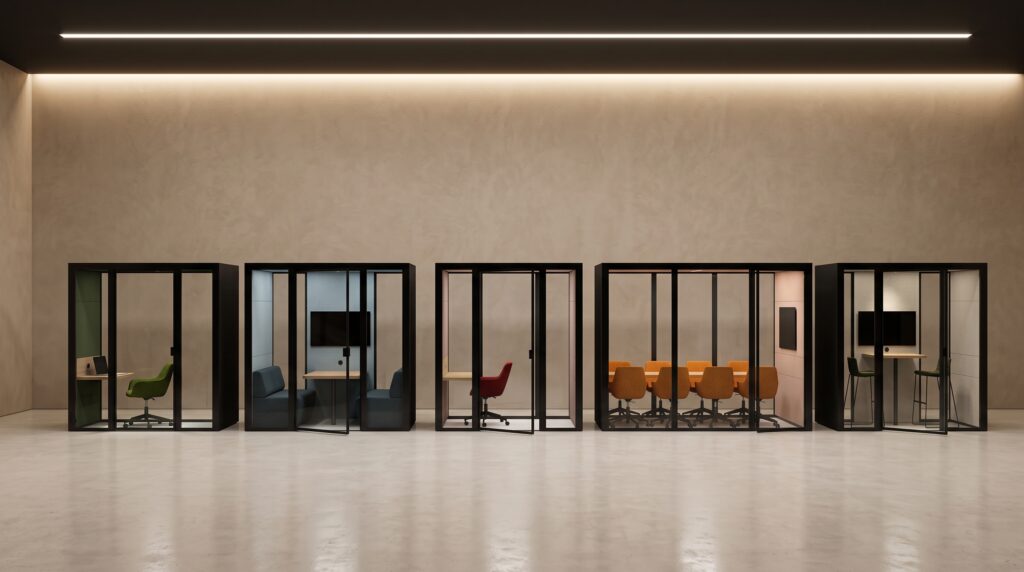
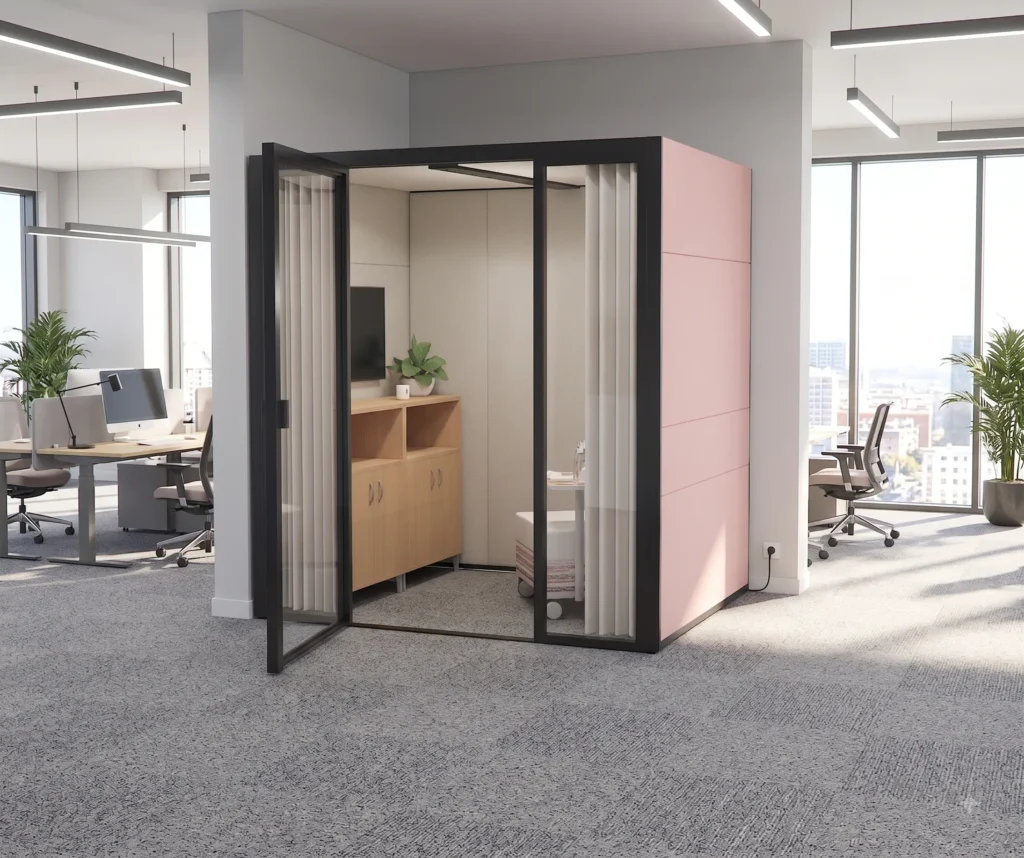
Our modular system generates 56 configurations from one interchangeable component grid. Panels, glazing, fronts, and backs swap or replace over time, so a damaged or outdated panel needs a new panel, not a new unit. A configuration change is a component swap. Every pod in the range reconfigures as needs change, and the demountable no-floor design leaves the original surface untouched. A reconfigurable system changes shape by swapping a component, whereas a movable unit only changes location.
What is flexible modular office furniture best for?
The best modular office furniture for flexibility suits churn-heavy, growing floors where team size and layout change year to year. It adapts without demolition, and the capital relocates with the tenant. This furniture serves the facility manager who re-plans the floor every year. You add or link units as headcount climbs, rather than ordering a fresh fit-out each time. For a wider view of how modular office furniture reconfigures instead of retires, our buyer’s guide walks through the systems behind it.
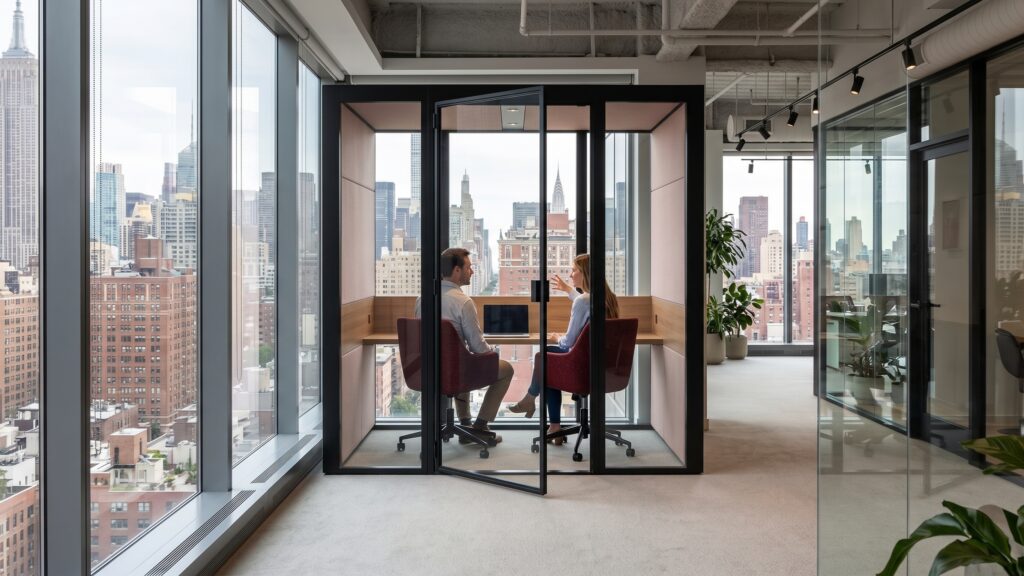
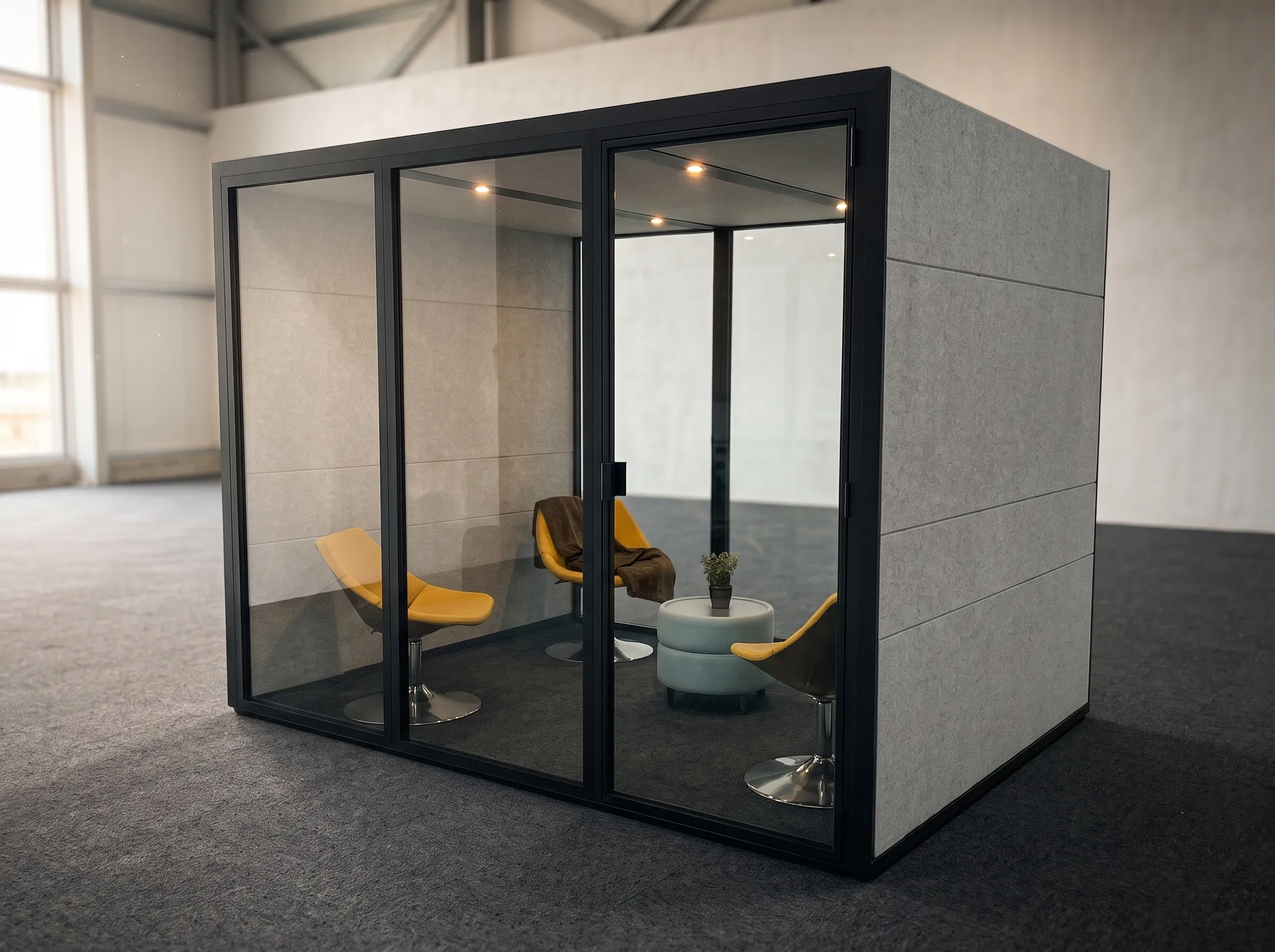
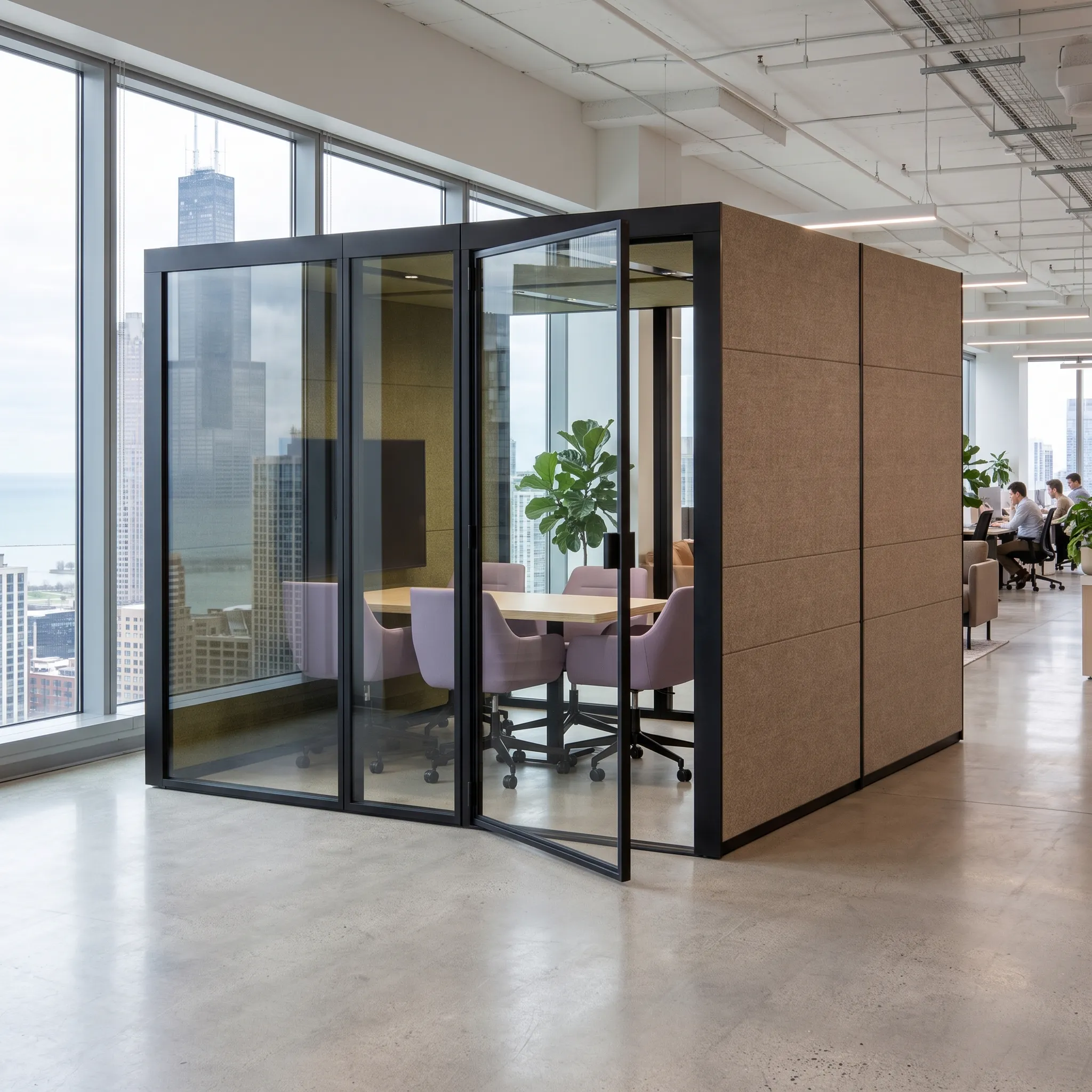
The range runs from single-user office pods up to a configuration seating up to 12 people. Units connect in series, and when they do, the pods fully maintain acoustic and ventilation performance. On a recent commercial office project, the team connected pods of different dimensions in series to fit the floor plan. The connected run read as coherent architecture while staying fully reversible. Modular furniture grows by adding or linking units. A fixed bank, by contrast, fits the headcount it originally served and cannot follow the team past it.
What is fixed built-in furniture best for?
Fixed built-in furniture is best for genuinely permanent, single-purpose spaces where the layout will not change for the life of the lease. Think of a reception desk tied to the entrance, or casework around fixed plumbing. In those spots a built-in piece is more affordable per square foot. It also reads as architecture, because it was never meant to move.
There is no argument against a built-in where the use is truly settled. A built-in piece is the right call where the use is permanent, whereas modular furniture earns its premium only where the floor plan will change. Pick the fixed option on purpose, in the places that have earned it. Then spend the flexibility budget where the floor is actually going to move.
The best modular office furniture for flexibility vs fixed built-in furniture
For a floor that gets re-planned, modular furniture and demountable pods win on three counts: cost over the lease term, speed to reconfigure, and relocatability. Fixed built-in work wins only where the space is permanent. The table below sets one axis per row. The real divide is what happens to the capital. A reconfigurable system travels to the next layout and keeps its value. A fixed fit-out, by contrast, counts as a leasehold improvement that the books zero out the moment the plan changes.
| Axis | Reconfigurable modular furniture and demountable pods | Fixed built-in furniture and permanent construction |
|---|---|---|
| Cost over lease term | Reusable capital that travels to the next layout | Leasehold improvement the books zero out at every reconfiguration |
| Speed to reconfigure | Built on-site in less than a day | Weeks of drywall downtime |
| Flexibility and relocatability | Component swap, demountable, leaves no trace | One-way install only demolition undoes |
| Acoustic privacy | Sealed Class A enclosure shuts out at least 30 dB | Open desks hand voices to the next desk |
| Scale as team grows | Single-user up to 12, connected in series | Sized once for the original headcount |
| Accessibility | No-floor, no-threshold, ADA-compliant by default | Retrofit a special variant |
| Sustainability and end of life | Designed for disassembly, up to 91% recycled, 99% recyclable | Crews tear out the fit-out and it heads to landfill |
Why sustainability shows up as flexibility, not a material badge
Sustainability sits in that last row as design longevity, not a material badge. A product that uses recycled content but seals into a single unit still ends up in landfill, so reuse through reconfiguration is what keeps the value in the building. The same test applies to a room divider, an office wall, or a modular conference room table. Each one earns its place by moving or demounting when the floor changes, rather than heading to a landfill.
When modular office furniture for flexibility is the wrong choice
A pod or modular furniture is the wrong choice in three cases. Pick the fixed option when a space answers permanently to code or plumbing. Choose it too when no freight route can bring components in, or when the need is purely visual with no acoustic or growth requirement. In those cases the fixed option is the honest answer, and it would be dishonest to pretend otherwise.
Permanent code-or-plumbing spaces. A wet lab or a fixed washroom answers to the building itself, so a built wall belongs there and a pod does not.
No freight route in. If components cannot physically reach the floor, a demountable system never gets off the truck, and a built room is the only option left.
A purely visual divider. When all a space needs is a sightline break with no acoustic or growth requirement, a simple modular room partition or screen is enough, and a pod is over-specified for the job.
The assumption that the floor plan is permanent is what makes a built-in look cheaper, and on a churn-heavy leased floor that premise is usually false. A built wall is the right call for a room that will never move. The moment the plan calls for a re-planned floor, a modular divider or pod earns its place instead.
Why Ecolution Design is the best modular office furniture for flexibility
Our range turns a configuration change into a component swap. Because 56 configurations come from one interchangeable component grid, you replace a single panel, glazing, or front instead of scrapping the whole unit. The enclosures carry a Class A acoustic rating and shut out at least 30 dB of ambient noise. Every pod is built on-site in less than a day, and the no-floor design needs no floor prep.
Materials matter, and the stronger claim is what happens to them later. Our pods use up to 91% recycled materials and are 99% recyclable. Because they are designed for disassembly, the components separate and recover individually through urban mining at end of life. That principle sits at the heart of a circular economy approach. That same design hands the slab back untouched and meets the ADA accessibility standards by default. Accessibility is the standard across the range, not a special variant.
Manufacturing in Grand Rapids, MI with locally sourced materials shortens the supply chain. That means faster delivery and faster replacement parts when a single panel needs swapping. Lower shipping carbon follows from the shorter route. For a facility manager weighing furniture that has to hold its value through a re-plan, that lead-time argument is the one they feel first. This is office furniture modular enough to still be worth something after the next reconfiguration.
Frequently Asked Questions
How can I tell if office furniture is genuinely reconfigurable and not just movable on casters?
Check the spec sheet for whether individual components swap or replace on their own, and whether a pod demounts and rebuilds leaving no trace. Casters only change location. Genuine reconfiguration means the shape changes by replacing a panel, a front, or a glazing section, not by rolling the same fixed object somewhere else.
Can you take down and rebuild a modular acoustic pod every day as the team rearranges the floor?
No. A pod stays demountable and reconfigures when the floor plan changes over time, not daily or weekly. The value is that a real re-plan, the kind that happens once a year or once a lease, does not mean demolition. Day-to-day, the pod stays put and does its job.
What happens to modular furniture and pods when the lease ends or the floor plan changes?
They come down and move with you. Because the system is demountable and the no-floor design leaves the slab untouched, the furniture keeps its value and relocates to the new layout. A fixed built-in fit-out, by contrast, loses its value and sits unwanted at lease end, so the money you spent on it does not come back. The question was never which furniture is most affordable to buy today. The best modular office furniture for flexibility is whatever survives the next reconfiguration without losing its value. A built-in fit-out that crews tear out at the next re-plan sends capital to landfill. A reconfigurable, demountable system, by contrast, stays reusable capital that travels to the next layout. Specify for the re-plan you know is coming, not the floor plan you have today. For the bigger picture, see how flexible and modular workspaces keep their value as teams change. Our team would love to start a conversation.